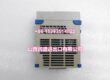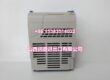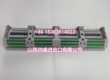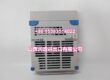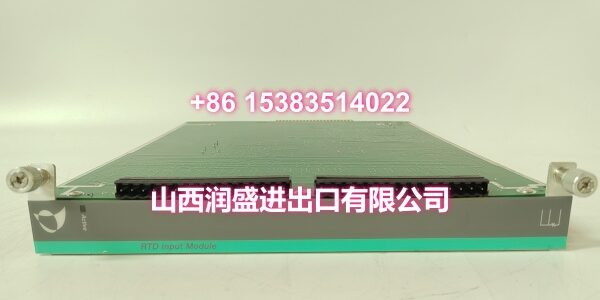
Product Core Brief
- Model: IOP303
- Brand: METSO (Valmet)
- Series: IOP Industrial Automation Line
- Core Function: Interfaces resistance temperature detectors (RTDs) for precise thermal monitoring in process control systems.
- Product Type: RTD / Resistance Temperature Input Module
- Key Specs: Multi-Channel RTD Support | High-Precision A/D Conversion | Backplane Isolated
- Condition: New Surplus / Original Packaging
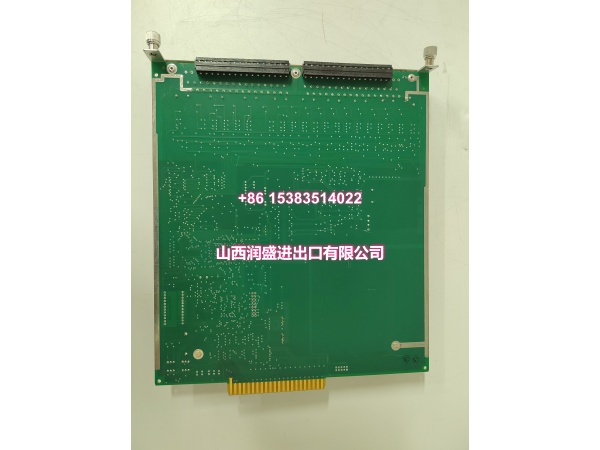
Key Technical Specifications
- Manufacturer: METSO Automation (Valmet)
- Country of Origin: Finland
- Model Number:
- Module Type: Resistance Temperature Detector (RTD) Input
- Sensor Compatibility: Pt100, Pt1000, Ni100, Cu10 (verify specific revision)
- Wiring Configuration: 2, 3, or 4-wire RTD support
- Isolation Rating: Channel-to-backplane optical isolation
- Operating Temperature: -40°C to +85°C
- Backplane Compatibility: METSO IOP Chassis Series
- Certifications: ATEX II 3G, IECEx, CE, UL Class I Div 2
- Measurement Accuracy: ±0.1% of span (typical)
Product Introduction (No Fluff)
Engineered for critical thermal monitoring, the METSO IOP303 provides reliable RTD signal conditioning for process control applications. This input module accurately converts resistance changes from temperature sensors into digital data, enabling precise thermal management in mining, cement, and power generation facilities.
Replacing a drifted or failed RTD card with a verified METSO IOP303 restores measurement integrity without full system recalibration. The multi-wire RTD support compensates for lead wire resistance, eliminating temperature errors common in long cable runs found in heavy industrial environments.
QA & Testing SOP (Dynamic & Transparent)
Every METSO IOP303 undergoes comprehensive functional validation:
- Precision RTD Simulation: We inject calibrated resistance values using a Fluke 754 documenting process calibrator; output must match within ±0.1% of span across the full temperature range.
- Lead Wire Compensation Test: Verified 2, 3, and 4-wire configurations to ensure lead resistance compensation algorithms function correctly and eliminate offset errors.
- Backplane Communication Check: Module seated in live METSO test chassis; verified register reads/writes, diagnostic flag reporting, and open-circuit detection via controller software.
- Anti-Counterfeit & Packaging: Serial/lot verification against factory records, sealed in anti-static shielding bag with desiccant and ESD-safe foam cradle.

Installation Pitfalls & Guide (Engineer to Engineer)
❗ Lead Wire Configuration Mismatch: The #1 cause of RTD measurement errors. If your field wiring uses 3-wire RTDs but the METSO IOP303 is configured for 2-wire, lead resistance will add a false positive offset to your temperature reading. Always verify the wiring configuration in the controller software AND hardware jumpers before commissioning.
❗ Open-Circuit Detection Threshold: RTD modules detect broken sensors by measuring infinite resistance. If your field wiring has high insulation resistance or moisture ingress, the module may falsely trigger an open-circuit fault. Check the diagnostic threshold settings in the controller configuration; some installations require adjusting this parameter for long cable runs.
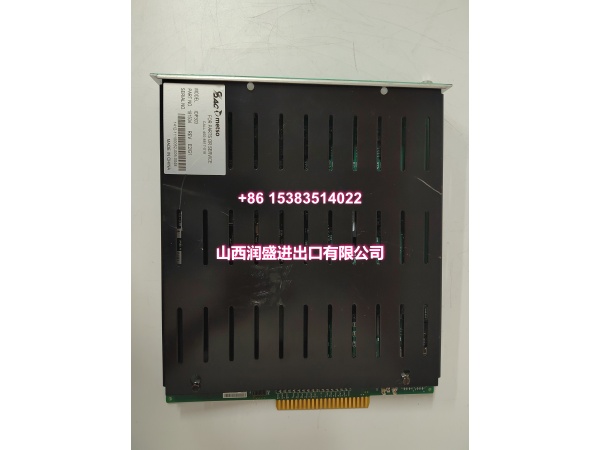
❗ Backplane Pin Damage: Inspect the backplane connector for bent or pushed-back pins before insertion. A single misaligned pin can short RTD inputs to the backplane bus, destroying both the module and adjacent cards. Use a flashlight and magnifying glass to verify pin integrity.
❗ ESD Sensitivity: The precision A/D converter front-end is highly sensitive to static discharge. Always wear a grounded wrist strap when handling. Insert the module squarely into the backplane—never rock it side-to-side, as this can damage the guide rails and connector pins.
Replacement SOP:
- Pre-Install: Power down chassis, lockout/tagout, verify zero backplane voltage. Document existing jumper settings and software configuration.
- Removal: Release retaining clips, pull module straight out; inspect backplane connector for damage.
- Install: Configure METSO IOP303 jumpers to match old module, align with guides, press firmly until seated; engage retaining clips.
- Power-on Test: Apply power, verify status LED, inject test resistance, confirm controller reads correct temperature value.
Technical FAQ
Q: Is the METSO IOP303 compatible with Valmet DNA or MaxDNA systems?
A: Yes. METSO Automation transitioned to Valmet, and the IOP303 is fully supported in both legacy METSO and current Valmet DNA/MaxDNA platforms. However, always verify the revision code; later revisions may include updated firmware for enhanced diagnostics or expanded RTD type support.
Q: Why is the price higher than generic RTD input cards?
A: Generic cards lack true lead wire compensation and industrial-grade components. The METSO IOP303 provides precision A/D conversion, multi-wire RTD support, and ATEX certification for hazardous environments. In a cement kiln or power plant boiler application, that accuracy prevents thermal runaway and equipment damage. The ROI is measured in avoided downtime and extended equipment life.
Q: What is the warranty on new surplus stock?
A: Full 12-month functional warranty against manufacturing defects. We test every unit on a live METSO test rack with calibrated RTD simulators before shipping. If it fails accuracy or communication tests, we replace it immediately. No restocking fees on DOA units.
Q: Can I hot-swap this module?
A: No. The METSO IOP backplane architecture does not support hot-swapping RTD input modules. Inserting or removing the METSO IOP303 while powered can cause voltage spikes that damage the module and adjacent cards. Always follow the full power-down SOP.
Q: Is this module still supported by Valmet/METSO?
A: The METSO IOP303 remains in active support for existing installations. Valmet maintains long-term availability for core I/O modules in the IOP series. However, always verify the full model number and revision; minor updates (e.g., IOP303B) may include improved filtering or expanded sensor compatibility. When in doubt, send us a photo of the module’s data plate for cross-reference.