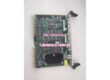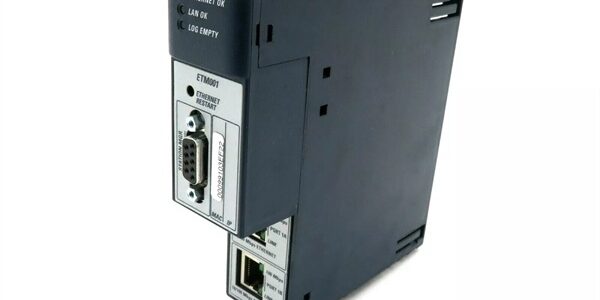
Product Core Brief
- Model:
- Brand: GE Fanuc / Emerson
- Series: PACSystems RX3i
- Core Function: Dual-port Ethernet communication module with integrated Layer2 switch, provides TCP/IP network connectivity for RX3i CPU or IC695NIU001 Ethernet NIU remote I/O station.
- Product Type: RX3i Ethernet Interface Module
- Key Specs: 2×RJ45 10/100BASE-TX | Built-in switch, single IP address | SRTP / EGD / Modbus TCP Client & Server Note: Discontinued legacy hardware; original new stock limited, surplus & refurbished widely available. Suffix variants (-ER, -HW, -JY, -JW etc.) are different PCB hardware revisions, mechanically pin-compatible. Supports hot-swap on certified RX3i hot-swap backplanes. Critical rule: When paired with IC695NIU001, must occupy the slot immediately adjacent to the NIU.
Key Technical Specifications
- Ethernet Ports: Two RJ45 10/100 Mbps auto-negotiation, auto MDI/MDI-X
- Internal Architecture: Embedded 2-port switch — single MAC address, single IP address for both ports; cannot assign separate IPs
- Supported Industrial Protocols
- SRTP: Programming download, peer-to-peer PLC communication
- EGD (Ethernet Global Data): Cyclic real-time remote I/O data exchange
- Modbus TCP Client & Server
- SNTP time synchronization
- Auxiliary Port: 9-pin D-Sub RS232 Station Manager debug port
- Backplane Power Consumption 3.3 VDC: 840 mA 5 VDC: 614 mA
- Isolation: 1500 VAC 1-minute withstand between Ethernet field circuit and backplane logic
- Front Panel LED Indicators: ETHERNET OK, LAN OK, LOG EMPTY, Port A / Port B activity
- Manual Ethernet reset pushbutton (reboot module firmware without rack power cycle)
- Operating Temperature: 0°C ~ +60°C horizontal cabinet mounting
- Storage Temperature: -40°C ~ +85°C
- Form Factor: Single-width RX3i module
- Compatible Universal Backplanes: IC695CHS012, IC695CHS016
- Compatible Controllers
- All RX3i CPU series (IC695CPE310, CPU320, CPU330, CPU331, CPU350 etc.)
- IC695NIU001 Ethernet Remote I/O NIU
- Supported Programming Software: Proficy Machine Edition
- Agency Certifications: UL508, Class I Div.2, CE
Product Introduction
is the standard Ethernet communications module for PACSystems RX3i platform. The dual RJ45 ports share one IP address thanks to the onboard switch, enabling simple daisy-chain wiring of PLCs without external network switches.
Two typical deployment modes:
- Installed alongside RX3i CPU: Connect PLC to HMI, SCADA, other PACSystems, Series 90-30 and VersaMax controllers.
- Installed adjacent to IC695NIU001: Provides Ethernet interface for standalone remote I/O station, transporting %I/%Q/%AI/%AQ cyclic data over EGD to master PLC.
Important limitation: This module cannot operate standalone; it must be paired with RX3i CPU or IC695NIU001. It has no onboard logic processing or I/O scanning capability.
QA & Testing SOP (Transparency Building)
- Incoming Inspection: Verify part marking and hardware revision suffix. Inspect backplane gold pins for bending/corrosion; check RJ45 ports, D-Sub connector and housing for physical damage.
- Live Testing: Mount on validated RX3i backplane with CPU/NIU. Assign static IP, establish SRTP programming connection and EGD cyclic data exchange, run continuous 24-hour communication stability test.
- Electrical Testing: Monitor backplane 3.3V/5V rail stability. Insulation resistance ≥10MΩ between Ethernet circuit and chassis protective ground.
- Firmware Record: Document installed firmware revision; photograph front panel labels before erasing IP configuration.
- Final QC & Packaging: Place module inside anti-static bag; attach dated QC tag confirming Ethernet link, protocol communication validation prior to shipment.
Installation Pitfalls & Guide
❗ Hot Swap Rule: Supports hot-swap only on hot-swap rated RX3i backplanes and CPU firmware ≥V2.51. On non-hot-swap racks, shut down rack power before insertion/removal. ❗ NIU Adjacent Slot Mandate: When used with , ETM001 must occupy the slot immediately next to NIU; separated slots break backplane messaging between NIU and Ethernet module. ❗ Single IP Constraint: Two Ethernet ports share one IP. You cannot create two independent network segments. ❗ Daisy Chain Caution: Avoid long daisy chains of multiple ETM modules; network fault on one unit breaks downstream stations. ❗ IP Configuration Backup: IP address, subnet, gateway are stored locally on ETM module. Module replacement requires re-entering network settings. ❗ ESD Risk: Static discharge damages Ethernet PHY transceivers, causing random link flapping and intermittent communication failures.
Replacement Guide:
- Pre-install: Lockout-tagout rack power (non-hot-swap chassis); record IP address, subnet, gateway, photograph Ethernet wiring and slot layout.
- Removal: Disconnect RJ45 cables, unlatch module and slide straight out without twisting backplane pins.
- Install: Insert new into original slot, reconnect Ethernet cables.
- Power-on Test: Restore power; download matching IP configuration, verify LAN LED status, confirm SRTP programming access and EGD/Modbus TCP communication.
FAQ
Q: What is the difference between and IC695ETM001ER? A: Base catalog number defines identical Ethernet functionality. -ER = specific PCB hardware revision. Mechanically plug-compatible. After replacement, reconfigure network IP and verify communications.
Q: Can the two RJ45 ports use different IP addresses? A: No. Internal switch architecture uses one single IP for both ports.
Q: Can work alone without CPU or NIU? A: No. It relies on backplane communication with RX3i CPU or .
Q: Can I use this module for Profinet / EtherNet/IP? A: No. Native protocols: SRTP, EGD, Modbus TCP. Profinet requires separate IC695PNC001 module.
Q: Will network IP settings automatically transfer to a replacement module? A: No. IP configuration resides on the ETM module itself. Replacement requires manual reconfiguration of IP, subnet mask and gateway.
Q: Can this module be used inside Series 90-30 racks? A: No. RX3i backplane bus and mechanical form factor are incompatible with Series 90-30 chassis.
Q: Can multiple EGD masters communicate to one ETM station? A: Yes, EGD supports multiple peer devices reading/writing data, but network load and update timing must be carefully engineered.