Product Core Brief
- Model: 85UVF1-1QDK3
- Brand: Fireye (Emerson combustion safety, Phoenix Series 2 microprocessor integrated flame scanner)
- Model Code Full Decode85UVF = Phoenix solid-state UV integrated flame scanner with built-in relay & full electronic self-diagnosis1 = Base UV sensor platform-1 = Standard sighting path, standard flame failure response timeQD = 8-pin quick-disconnect socket (no factory captive cable; match 59-546-x separate QD cable)K3 = Special wide-spectrum extended optical filter (core difference vs standard 85UVF1-1QD)
- Core Function: SIL3-certified solid-state UV flame monitor with K3 wide-band optical filter, designed for heavy fuel oil, dirty flue gas, low-UV weak flame conditions where standard UV scanners fail. Captures 310–500nm UV+near-visible flame flicker, auto-learn flame signature, dual independent flame/fault Form C relays, isolated 4–20mA flame strength analog output, full continuous electronic self-check without mechanical shutters. Compliant with NFPA, UL, FM, Exida SIL3 industrial combustion safety standardsFireye.
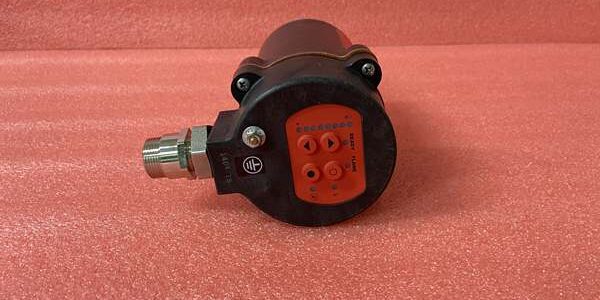
- Product Type: Complete scanner main body (die-cast aluminum NEMA4X housing, K3 coated quartz lens, solid-state UV chip, front programming keypad/LEDs, 3/8” purge air port, 8-pin QD socket)
- Key Specs: K3 filter spectral range 310–500nm (vs standard 295–320nm); 24VDC power; built-in flame + fault relays; isolated 4–20mA; auto flame threshold learn; continuous electronic self-diagnosis; IP66/NEMA4X; Class I Div2 hazardous location rated.Note: Obsolete legacy Phoenix II model, stocked brand-new surplus; mounting flange and QD extension cable sold separately. The K3 filter variant is mandatory for heavy oil, residual oil, waste fuel burners with weak UV emission.
Key Technical Specifications
Optical & Flame Detection (K3 Unique Core Parameter)
- Standard 85UVF1-1QD spectral band: 295–320nm narrow pure UV
- 85UVF1-1QDK3 K3 filter spectral response: 310–500nm extended UV + near visible blue flame band
- Detection principle: Analyze flame flicker modulation amplitude/frequency, one-touch auto-learn flame signature <60s
- Suitable fuels: Natural gas, propane, light oil, heavy fuel oil, residual oil, waste oil burners (K3 solves weak UV heavy oil flame blind spot)
- Flame loss response time: User selectable FFRT < 2–3 seconds
- Max effective sight distance: Up to 2.5m with clean lens and rated purge air
- Field of view: 90° conical wide viewing angle
- K3 advantage: Tolerates high flue ash, soot, low UV flame without false flame loss trips
Electrical Signals & Power
- Supply voltage: 24VDC ±10%, 200mA max draw
- Dual independent Form C SPDT dry relays (2A @30VDC resistive):
- Flame relay: Energized when valid flame detected
- Fault relay: Energized on scanner hardware fault, lens blockage, sensor degradation, wiring fault
- Analog output: Optically isolated 4–20mA (4mA=no flame, 20mA=max flame intensity), max load 750Ω for DCS/PLC trending
- Electrical interface: 8-pin QD quick-disconnect socket, matching cable series 59-546-x (separate accessory)
- Local HMI: 4-button programming keypad + multi-color LED indicators (Ready / Flame / Fault / Learn mode)
Mechanical & Purge Air
- Housing: Powder coated die-cast aluminum, IP66 / NEMA4X dust/water/oil splash resistant
- Purge air inlet: 3/8” NPT threaded port for lens cooling & anti-foulingStandard purge flow: 3–5 SCFM clean oil-free instrument air; heavy oil soot environments up to 15 SCFM
- Sight pipe flange: Sold separately (P/N 129-168-1 NPT / 129-168-2 BSP) with built-in heat isolation insert
- Dimensions: 227mm L × 112mm W × 90mm H
- Net weight: 2.69kg (5.90 lbs)
- Minimum sight pipe inner diameter ≥25mm, straight unobstructed line to flame root
Environmental & Safety Certifications
- Continuous housing ambient temp: -40°C ~ +65°C; internal electronics max +82°C
- Storage temperature: -40°C ~ +85°C
- Vibration tolerance: Withstands furnace continuous vibration without signal drift
- Approvals: FM Class I Div2 Groups A/B/C/D; CE; UL/cUL; Exida SIL3 functional safety certifiedFireye
Compatible System Architecture
- Standalone burner control: Direct drive fuel safety shutoff valve via internal flame relay
- PLC/DCS integration: Use 4–20mA analog trending + fault relay digital fault alarm
- Universal compatibility: Works with Fireye Phoenix burner systems and third-party 24VDC burner PLCs (no proprietary pulse signal)
Product Introduction
Fireye 85UVF1-1QDK3 belongs to Phoenix Series 2 integrated flame scanners, the special K3 wide-spectrum variant optimized for heavy oil and dirty combustion environments. The biggest difference from standard 85UVF1-1QD is the built-in K3 broadband optical filter: standard narrow UV scanners fail on heavy fuel oil flames which produce minimal deep UV radiation; the K3 filter expands detection to 310–500nm to capture blue near-visible flame emission, stably identifying weak heavy oil flames without frequent false flame-out alarms.
-1QD quick-disconnect design eliminates factory fixed cable; users select custom-length 59-546-x QD extension cables on-site. Cable damage only requires cable replacement without removing the scanner body from furnace sight pipes, cutting maintenance downtime during boiler shutdowns.
One-click auto-learn commissioning simplifies field setup: ignite the burner, activate Learn mode, the scanner automatically samples flame flicker characteristics and locks optimal flame ON/OFF trip thresholds without potentiometer adjustment. Isolated 4–20mA analog output continuously uploads real-time flame intensity data to DCS for long-term combustion efficiency monitoring. Dual redundant relay contacts provide hardwired flame and fault safety interlock signals to fuel shutoff valves, fully complying with NFPA boiler flame failure protection codes.
Typical application scenarios: Heavy fuel oil industrial boilers, refinery reformer heaters, waste oil incinerators, asphalt plant thermal furnaces, marine oil-fired boilers, multi-fuel dual gas/oil burners with heavy oil switching.
QA & Testing SOP
- Incoming Inspection: Verify model marking 85UVF1-1QDK3; inspect K3 coated quartz lens scratch-free, aluminum housing crack-free, keypad responsive, LED indicators normal; confirm CU-119C datasheet and anti-static factory packaging intact.
- Bench Functional Test: Stabilized 24VDC power + matching QD cable; simulate weak heavy-oil UV flame source, 24hr continuous run test, validate auto-learn flame threshold, flame relay pull-in/drop-out, linear 4–20mA output, fault relay trigger on lens blockage/sensor failure.
- Purge Air & Sealing Test: 4SCFM dry clean purge air supplied, check housing air tightness; high/low temperature cycling test to eliminate lens fogging and signal drift.
- Parameter Record Backup: Document QD cable pin definition, standard purge air flow/pressure, recommended sight pipe length range for maintenance reference.
- Final Packaging: Attach serialized test pass tag with flame response and self-diagnosis data; shock foam wrap scanner, static shielding bag packaging to protect K3 optical lens during transit.
Installation Pitfalls & 4-Step Replacement Guide
❗ K3 Filter Application Risk: Only select QDK3 for heavy oil / waste fuel burners; using K3 on pure natural gas burners may slightly increase background furnace light interference, standard -1QD is preferred for gas-only systems.❗ QD Cable Matching Risk: No built-in cable; must purchase original Fireye 59-546-x 8-pin quick-disconnect cable, generic multi-core cable cannot mate the proprietary QD socket.❗ Purge Air Mandatory Risk: Continuous oil-free dry purge air required; missing purge air leads to rapid soot coating on K3 lens, signal attenuation and false flame loss trips; air source must install oil/water dual filter.❗ Sight Path Alignment Risk: Lens must target flame root (strongest flicker zone); aiming at furnace wall or secondary air without flame core creates weak unstable signal and intermittent flame faults.❗ Power Polarity Risk: Reverse 24VDC polarity locks scanner into permanent fault state, requires full power cycle reset; sustained reversed supply permanently damages mainboard microcontroller.❗ Over-Temperature Damage Risk: Housing ambient temperature cannot exceed +65°C; long-term overheating degrades solid-state UV chip and K3 optical coating, losing SIL3 safety performance.
4-step replacement guide
- Pre-install LOTO: Lock burner fuel supply and 24VDC control power; wait furnace full cooling; wear ESD grounding wrist strap; photograph original sight pipe mounting angle and QD cable wiring layout for reference.
- Removal: Close purge air valve, disconnect QD quick-disconnect cable from scanner socket; loosen flange bolts, detach scanner from furnace sight pipe; label cabinet-side 24VDC power, 4–20mA analog and relay wiring terminals.
- Hardware Install: Mount separate NPT/BSP flange kit on furnace sight pipe; install new 85UVF1-1QDK3 scanner to flange, adjust angle to center lens on burner flame root; connect filtered dry purge air to 3/8” inlet, set flow to 4SCFM (10–15SCFM for heavy oil soot-heavy furnaces); mate matching 59-546-x QD cable to scanner socket, wire cabinet side per original polarity.
- Power-On Commissioning: Restore 24VDC power, scanner Ready LED steady ON; ignite main heavy-oil burner flame, activate front-panel Learn mode to auto-calibrate K3 wide-band flame threshold; confirm Flame LED steady ON, 4–20mA analog output stable 12–18mA; simulate flame loss by cutting fuel supply, verify flame relay drops out within 3s and triggers fuel valve safety interlock trip.
FAQ
Q: What is the key difference between 85UVF1-1QD and 85UVF1-1QDK3?
- 85UVF1-1QD: Standard narrow 295–320nm UV filter, for clean natural gas / light oil burners only
- 85UVF1-1QDK3: K3 extended wide-spectrum filter 310–500nm, captures weak near-visible flame emission, dedicated for heavy fuel oil, residual oil, waste oil burners with low deep-UV outputAll mechanical, electrical, relay, 4–20mA and QD connector hardware is identical; only internal optical lens coating differs.
Q: What does K3 suffix stand for?K3 = Factory integrated wide-range extended UV/blue optical filter coating, the special optical option for low-UV heavy fuel combustion applications.
Q: Can 85UVF1-1QDK3 work with third-party Siemens / Honeywell burner PLCs?Yes. It uses standard 24VDC power, independent Form C dry contact relays and isolated 4–20mA analog output with no proprietary communication protocol, compatible with all mainstream industrial burner control systems.
Q: What fault conditions activate the fault relay?Solid-state UV sensor degradation, K3 lens full soot blockage, internal mainboard electronics failure, 24VDC supply voltage out-of-range, QD cable open/short circuit, self-diagnosis flame signal mismatch.
Q: What warranty coverage applies to new surplus 85UVF1-1QDK3 scanners?Brand-new stocked units carry a 12-month functional warranty covering K3 optical filter/lens, solid-state UV sensor, microcontroller board, relay contacts and housing sealing defects. Damage caused by missing purge air soot fouling, over-temperature operation, reversed DC polarity, non-Fireye mismatched QD cables or unfiltered oily purge air is excluded from warranty coverage.
Q: Is there a modern drop-in replacement for discontinued 85UVF series K3 models?Fireye current Phoenix 3 series 85UVF3-K3 upgraded successor has matching K3 wide-spectrum detection; but QD pinout, flange mechanical dimensions and internal firmware FFRT settings are partially revised, requiring sight pipe flange rework and full flame re-learning; no fully plug-and-play direct swap without site modification.
Q: What fuel types require selecting the K3 variant 85UVF1-1QDK3?Heavy fuel oil (HFO), residual oil, waste industrial oil, multi-fuel gas/oil switch burners operating on oil mode, low-UV low-flame-temperature process incinerators. Pure natural gas / propane light oil burners can use cheaper standard -1QD models without K3 filter.