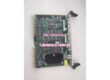
Product Core Brief
- Model: IS400TCATH1ADC
- Brand: General Electric (GE Vernova)
- Series: Speedtronic Mark VIe Distributed Turbine Control Platform
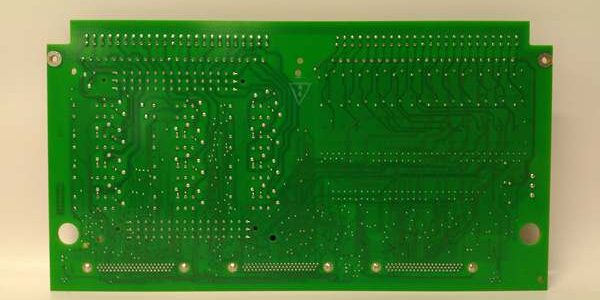
- Core Function: TCAT core analog terminal board delivering field wiring termination, signal isolation, and loop power distribution for PCAA core analog I/O packs; processes LVDT valve position, seismic vibration, 4–20mA transmitters, and pulse speed signals for gas/steam turbine safety and performance monitoring
- Product Type: Field termination PCB mated to IS230PCAAH1A core analog processor packs
- Key Specs: 24 x 4–20mA AI | 12 LVDT inputs | 12 seismic inputs | 3 TMR voted 4–20mA AO | Plug-in Euro terminal blocks
- Condition: New Original (New Surplus), active OEM power generation spare with no published end-of-life timeline
Key Technical Specifications
| Parameter | Defined Value |
|---|---|
| Analog Input Channels | 24 isolated 4–20mA transmitter inputs with dedicated 24VDC loop power per channel |
| Displacement Inputs | 12 LVDT linear valve position sensor channels |
| Vibration Inputs | 12 seismic transducer signal inputs for bearing casing vibration monitoring |
| Pulse Inputs | 2 magnetic pulse rate speed pickup channels |
| Analog Outputs | 3 hardware TMR-voted 4–20mA control outputs for redundant valve actuation logic |
| Field Termination | 120-point pluggable Euro-style screw terminal blocks for simplified wiring maintenance |
| Auxiliary Power Distribution | 12 onboard 24VDC 25mA supply terminals for field instrument power; pairs with JGPA shield board for extra loop power and cable shield termination |
| Channel Isolation Rating | 1500 Vrms galvanic isolation separating field wiring and IONet backplane logic |
| Backplane Interfaces | P3/P4 multi-pin connectors for high-speed IONet communication to PCAA analog processor packs |
| Rack Supply Input | 15VDC and 28VDC filtered power sourced from paired PCAA I/O packs |
| Typical Continuous Power Draw | 7.3 W under full instrument load conditions |
| Standard Operating Temp | -30°C to +65°C; conformal coated variants rated -40°C to +85°C coastal/offshore cabinets |
| Humidity Tolerance | 5%–95% RH non-condensing cabinet atmosphere |
| Physical Dimensions | 330.2 mm H × 177.8 mm W × 45 mm D; unit weight 3.2 kg |
| Compliance Standards | UL 508, CE EMC Class A, IEEE 1613 power control standard, ATEX Zone 2 compatible |
| Reference Manual | GEH-6721 Volume II Mark VIe System Hardware Guide |
Product Introduction
This TCAT core analog terminal board acts as the primary wiring interface between PCAA analog processor packs and all turbine analog field instruments. Configurable input jumpers set each 4–20mA channel to floating or grounded return modes to eliminate ground loop induced signal drift.
Passive isolation circuits distribute field sensor signals to one or multiple redundant PCAA packs for triple modular redundant safety architectures. The unit cannot run analog scaling, LVDT linearization, or vibration alarm logic independently; all signal processing executes on the paired PCAA I/O pack installed in the Mark VIe rack card slots.
Firmware/Software Versions & Upgrade Notes
Minimum compatible Mark VIe configuration software: ToolboxST v08.07. All PCAA core analog packs paired with this terminal board must run matching firmware builds; mismatched firmware disables TMR analog output voting and triggers persistent IONet LINK fault alarms.Downgrades below v08.07 remove automatic LVDT offset calibration and channel jumper fault diagnostic reporting. All firmware flashes target the PCAA processor packs over the rack IONet bus; no programmable firmware resides on the unit itself. Always export analog channel scaling, LVDT linearization curves, and jumper layout documentation before initiating any controller firmware update. Jumper positions must be re-verified post-flash to restore correct loop power and signal return settings.
Frequently Asked Questions (FAQ)
- Is hot-swap operation safe while the Mark VIe rack remains energized?The PCAA main analog processor pack supports hot-swap with rack power active, but technicians must fully power down the I/O chassis to remove or replace the unit. Pulling the terminal board under energized conditions creates voltage transients across LVDT and seismic sensor wiring that damage the PCAA ADC circuits and disable critical turbine valve position and vibration monitoring permanently.
- Is this terminal board obsolescent, and are direct drop-in hardware upgrades available?This board remains an active OEM spare for Mark VIe combined-cycle fleets with no scheduled end-of-life date. The base uncoated variant IS400TCATH1A is not a zero-modification plug-and-play swap; it lacks enhanced surge suppression and requires cabinet environmental validation before commissioning. TCATH1ADCX adds heavy-duty transient protection for industrial switchgear wiring runs.
- Will LVDT linearization curves, 4–20mA scaling, or vibration alarm thresholds erase if the rack loses full power?All analog scaling values, LVDT calibration offsets, and vibration trip limits store in non-volatile flash memory on the paired PCAA I/O pack. The terminal board contains zero user-programmable logic storage; only physical jumper positions define signal return and loop power modes, which remain static unless manually repositioned. Full rack power loss does not erase any software-based analog configuration data.
- What warranty terms separate New Surplus inventory from refurbished alternatives?New Surplus terminal boards carry a 12-month functional warranty covering PCB trace continuity, screw terminal torque retention, channel isolation barriers, and multi-pin connector contact integrity. Refurbished units typically offer only 3–6 month limited coverage and carry hidden risks of degraded isolation capacitors, corroded terminal lugs, and worn jumper pins that generate drifting analog readings during turbine load transients.
- Why does New Surplus pricing sit higher than generic used/refurbished marketplace listings?All New Surplus inventory completes standardized QC validation: serial traceability cross-check against OEM production logs, 24-hour thermal soak bench testing with simulated LVDT, seismic, and 4–20mA transmitter traffic across all channels, 500 V megger insulation testing verifying >100 MΩ channel-to-ground isolation, full jumper configuration validation, and anti-static sealed foam packaging. Refurbished lots skip this multi-step validation workflow, introducing unplanned downtime risk for safety-critical turbine analog control loops.
- Can discrete digital contact inputs or RTD temperature probes wire directly to the screw terminal blocks?No, every terminal pin is dedicated to analog displacement, vibration, current loop, and pulse speed signals. Discrete trip interlocks require IS200TDBTH6ACD; RTD temperature monitoring uses IS200SHRAH2AED. Verify with GEH-6721 Volume II before modifying field wiring to avoid permanent channel circuit damage.
- Does the terminal board locally store vibration fault snapshots or long-term valve position trending data?No, the PCB contains no on-board memory or signal processing hardware. All seismic fault logs, LVDT position trending records, and analog channel diagnostic counters are captured and retained exclusively by the Mark VIe rack’s primary system controller CPU. The unit only delivers passive wiring termination, galvanic isolation, and loop power distribution for analog field instrument links.