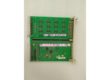
Product Core Brief
- Model: SC520M (3BSE016237R1)
- Brand: ABB
- Series: ABB control system / DCS submodule carrier
- Core Function: Submodule carrier with local CPU; hosts and interfaces submodules while supporting MB300 and MB300E communication networks.
- Product Type: Submodule carrier module with local CPU
- Key Specs: Local CPU onboard | MB300 / MB300E support | 300 × 30 × 291 mm | 0.742 kg
- Condition: New Original / New Surplus (verify by full part number)
Key Technical Specifications
- Ordering Number: 3BSE016237R1
- Product Type: Submodule carrier with local CPU
- Network Support: MB300, MB300E
- Processing: Local CPU for submodule-level control and data handling
- Dimensions (H × W × D): 300 × 30 × 291 mm
- Net Weight: 0.742 kg
- Mounting: ABB control system rack / carrier slot
- Lifecycle Status: Legacy component; verify current ABB lifecycle phase before long-term deployment
- Environmental: Industrial indoor cabinet installation; verify exact temperature range against OEM nameplate
Product Introduction (No Fluff)
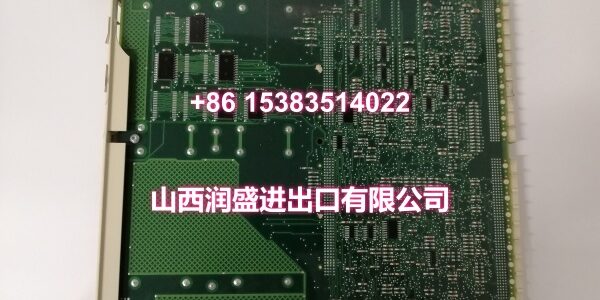
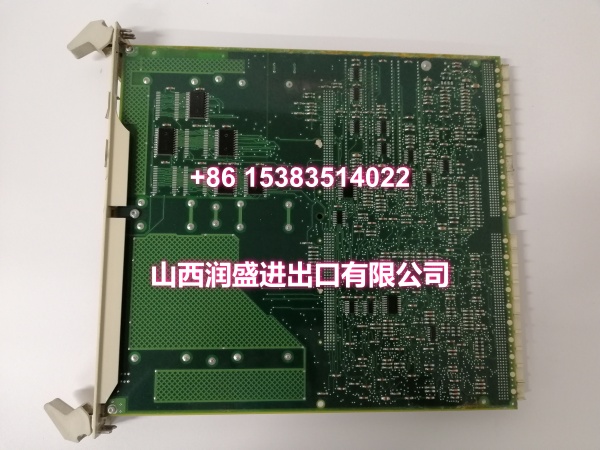
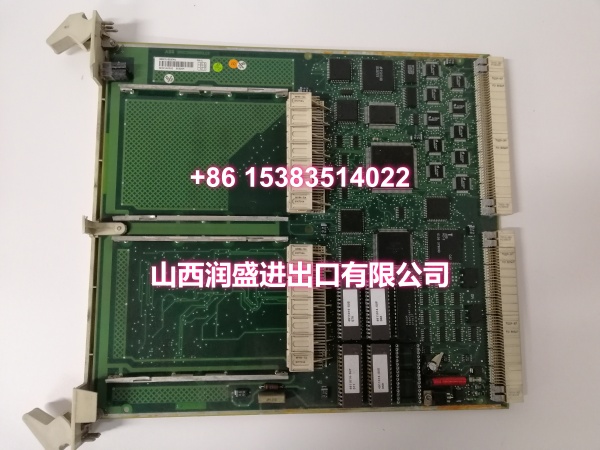
The SC520M (3BSE016237R1) is an ABB submodule carrier with a local CPU. It hosts subordinate modules and provides local processing, bus interfacing, and MB300 / MB300E network connectivity within an ABB control system.
Its practical value is keeping distributed control nodes operational in legacy ABB installations. Because it carries its own CPU, it can handle local tasks without overloading the main controller, while the MB300/MB300E interface maintains communication with the rest of the system. For maintenance teams replacing failed carriers, matching the exact 3BSE016237R1 number is critical—carrier firmware and bus configuration are not always interchangeable across variants.
QA & Testing SOP (Dynamic & Transparent)
For legacy carrier modules, we verify mechanical and communication health before shipping.
- Part number verification — Confirm 3BSE016237R1 on the label and inspect the backplane connector for bent pins or corrosion.
- Visual inspection — Check for burn marks, swollen capacitors, damaged traces, or loose socketed components.
- Continuity and insulation check — Verify no short circuits between power rails and bus connectors before energizing.
- Bench power-up — Apply rated supply and confirm normal LED indicators and local CPU startup.
- MB300/MB300E communication check — Verify bus interface response where test fixtures are available; pack in anti-static shielding with connector protection.
Installation Pitfalls & Guide (Engineer to Engineer)
❗ Match the exact ordering number. SC520M may have multiple variants. Only 3BSE016237R1 is confirmed for this configuration. Substituting a different suffix can cause bus or firmware mismatches.
❗ Verify MB300 vs MB300E configuration. The carrier supports both, but network type, termination, and node addressing must match the existing rack.
❗ Check submodule seating. Poorly seated daughter modules or dirty backplane contacts are a common cause of intermittent faults that look like carrier failure.
❗ Confirm firmware compatibility. A replacement carrier may need firmware alignment with the existing system before it can join the MB300/MB300E network.
Replacement steps:
- Back up the control system configuration and document submodule positions.
- Remove power, verify zero voltage, and disconnect communication cables.
- Remove submodules from the faulty carrier and install them into the replacement SC520M.
- Reinstall the carrier, restore power, verify LEDs, and confirm MB300/MB300E communication.
Technical FAQ
What does the SC520M do?
It is a submodule carrier with a local CPU that hosts subordinate modules and provides MB300/MB300E network connectivity within an ABB control system.
Is SC520M a communication module?
It includes communication capability for MB300/MB300E, but it is primarily a submodule carrier with a local CPU rather than a standalone communication card.
Can I replace it with any SC520M?
No. The ordering number 3BSE016237R1 must match. Different SC520 variants may have different firmware, bus support, or submodule compatibility.
Is it still available?
It is a legacy component. New surplus and verified replacements can be sourced, but long-term projects should evaluate migration to a supported ABB platform.
What is the typical warranty?
Warranty depends on condition and supplier terms. For surplus stock, expect a limited functional warranty rather than a full OEM new-product warranty.