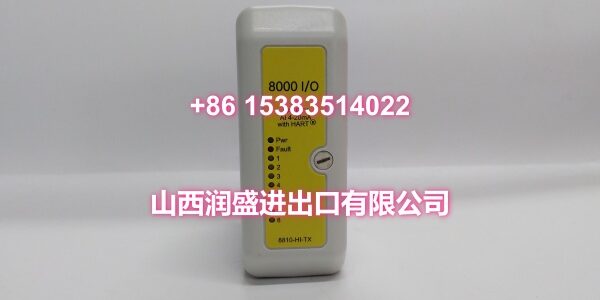
Product Core Brief
- Model: 8810-HI-TX-01
- Brand: GE (GE Intelligent Platforms / Emerson)
- Series: PAC8000 Safety / SafetyNet Analog Input
- Core Function: 8-channel safety analog input module for PAC8000 and SafetyNet systems, accepting 4–20 mA signals with HART pass-through for hazardous-area and safety-related process applications.
- Product Type: Safety Analog Input Module
- Key Specs: 8 single-ended 4–20 mA inputs | 16-bit resolution | HART pass-through | 2-/3-/4-wire transmitter support | 24 VDC bussed field power | SafetyNet / PAC8000 compatible
- Condition: New Original / New Surplus
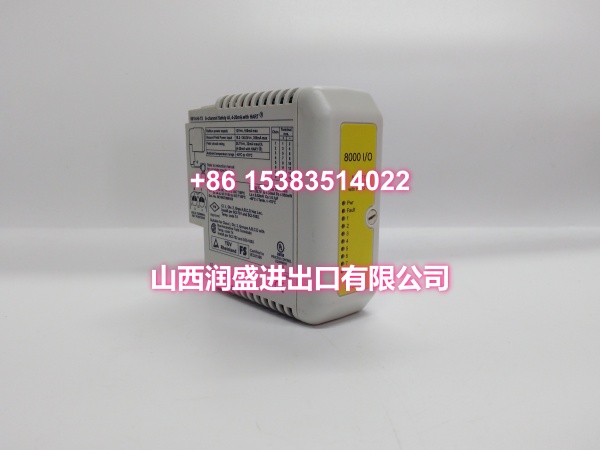
Key Technical Specifications
- Part Number: 8810-HI-TX-01
- Product Family: PAC8000 / SafetyNet Safety Analog Input
- Analog Input Count: 8 single-ended 4–20 mA channels
- Resolution: 16-bit
- Scan / Response: Approximately 25 ms per point; HART update about 0.75 s per point (reference value for 8810-HI-TX series)
- HART Function: HART pass-through, acquisition, and status reporting
- Transmitter Support: 2-wire, 3-wire, and 4-wire transmitters
- Field Power: Requires 24 VDC bussed field power from 8914-PSAC
- Current Consumption: System 70 mA; Field 350 mA (reference value for 8810-HI-TX series)
- System Compatibility: PAC8000 I/O nodes; SafetyNet safety system I/O
- Typical Applications: Safety instrumented systems, emergency shutdown, fire and gas monitoring, burner management, hazardous-area analog input, and HART-enabled transmitter integration
Product Introduction (No Fluff)
The GE 8810-HI-TX-01 is an 8-channel safety analog input module for the PAC8000 and SafetyNet platforms. It accepts up to eight single-ended 4–20 mA inputs and supports HART pass-through, allowing smart transmitter data and status to be read without removing the field device from the control loop.
This module is designed for safety-related and hazardous-area process applications, including emergency shutdown, fire and gas detection, and burner management systems. It supports 2-, 3-, and 4-wire transmitters and requires 24 VDC bussed field power from the PAC8000 power module. Because it belongs to the PAC8000 Safety / SafetyNet family, it must be installed in a compatible PAC8000 carrier and configured through the supported engineering tool.
QA & Testing SOP (Dynamic & Transparent)
For a safety analog input module, we verify identification, physical condition, terminal integrity, and channel readiness before release.
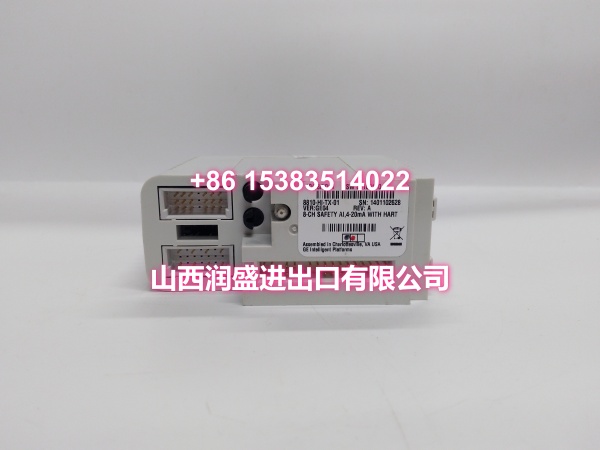
- Part number verification: Confirm 8810-HI-TX-01 on the module label. Record revision, serial number, and firmware/date code where available.
- Visual inspection: Check the module housing, field terminal, Railbus connector, LEDs, and PCB for corrosion, burn marks, or mechanical damage.
- Terminal inspection: Verify the snap-on field terminal is intact, properly seated, and free of oxidation or loose pins.
- Backplane connector check: Inspect Railbus connector pins for bending, contamination, or poor contact.
- Power and LED check: Where a compatible PAC8000 carrier is available, apply system and 24 VDC field power and verify module status LEDs.
- Channel verification: Apply a known 4–20 mA source to selected channels and confirm correct readings.
- HART readiness check: If HART devices and host software are available, verify HART pass-through and status reporting.
- Safety configuration note: For SafetyNet applications, confirm that safety parameters, channel assignment, and fault-state behavior are verified by qualified personnel.
- ESD-safe packaging: Ship in anti-static bags with foam protection. Include part number, revision, and inspection status on the label.
Installation Pitfalls & Guide (Engineer to Engineer)
❗ This is a safety analog input module. The 8810-HI-TX-01 is used in PAC8000 Safety / SafetyNet applications. Do not substitute it with a non-safety PAC8000 analog input module without verifying certification, firmware, and system configuration.
❗ 24 VDC bussed field power is required. The module requires 24 VDC field power from the PAC8000 power module such as 8914-PSAC. Missing field power will cause open-loop faults or incorrect readings.
❗ Verify 2-/3-/4-wire wiring. Incorrect transmitter wiring can cause measurement errors, loop faults, or incorrect safety responses.
❗ HART pass-through is not a full HART master. The module supports HART pass-through and status reporting, but HART configuration depends on the host system and software.
❗ Do not modify safety parameters without authorization. In SafetyNet systems, safety-related parameters and downloads are typically restricted to authorized users and trusted hosts.
❗ Confirm carrier and BIM compatibility. The module must be installed in a compatible PAC8000 carrier and managed by a supported bus interface module or SafetyNet controller.
Replacement steps:
- Pre-install: Record channel assignments, transmitter types, HART addresses, scaling, alarm limits, and safety fault-state settings.
- Isolate: Follow plant safety procedures before disconnecting field wiring or removing the module.
- Remove: Release the field terminal and remove the module from the carrier without forcing the Railbus connector.
- Install: Seat the replacement 8810-HI-TX-01 firmly, verify the field terminal, and confirm 24 VDC field power.
- Commission: Verify channel readings, check diagnostics, test HART pass-through if required, and confirm safety system behavior before returning to service.
Technical FAQ
What does 8810-HI-TX-01 do?
It provides eight 4–20 mA safety analog input channels with HART pass-through for PAC8000 and SafetyNet systems.
Is it a safety-rated module?
Yes. It is listed as a PAC8000 Safety / SafetyNet analog input module used in safety-related and hazardous-area applications.
Can it read HART transmitters?
Yes. It supports HART pass-through, acquisition, and status reporting, subject to host system configuration.
What field power does it need?
It requires 24 VDC bussed field power from the PAC8000 power module, typically 8914-PSAC.
Can it replace 8810-HI-TX?
8810-HI-TX-01 is closely related to the 8810-HI-TX PAC8000 safety analog input family, but revision, firmware, and safety configuration should be verified before substitution.