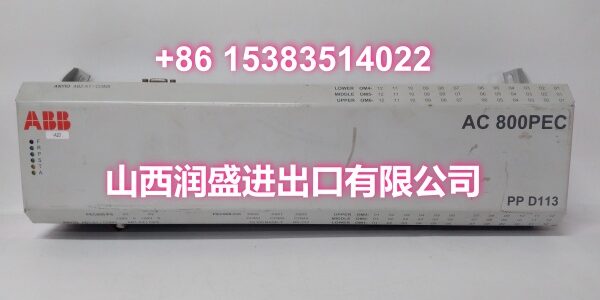
Product Quick Summary
- Model: PPD103B101
- Part Number: 3BHE020455R0101
- Brand: ABB
- Core Function: Static excitation controller for generator excitation systems
- Voltage: 24V DC ±15%
- Current Draw: 2.5A max
- Dimensions: 120 × 180 × 140 mm
- Weight: Approx. 1.8 kg
- Condition: New surplus / legacy discontinued — ready to ship
- Origin: Sweden
The PPD103B101 is an ABB static excitation controller used in generator excitation systems to maintain precise field current control and voltage stability. It supports both legacy analog signals and modern Modbus communication, making it suitable for retrofits and new installations in power generation facilities.
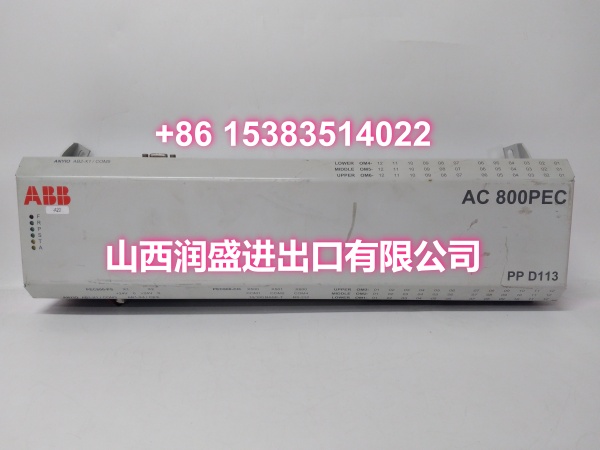
Core Technical Specifications
| Parameter | Detail |
|---|---|
| Product Type | Static Excitation Controller |
| Part Number | 3BHE020455R0101 |
| Brand | ABB |
| Operating Voltage | 24V DC ±15%, 2.5A max (ripple <5%) |
| Dimensions | 120 × 180 × 140 mm |
| Weight | Approx. 1.8 kg |
| Operating Temperature | -25°C to +70°C (derate above 55°C) |
| Analog I/O | 4x analog inputs (0-10V / 4-20mA) |
| Relay Outputs | 2x relay outputs |
| Communication | RS-485 Modbus RTU |
| Installation | DIN rail TS-35/7.5 or panel mount |
| Certifications | CE, UL |
| Condition | New surplus / legacy |
Engineer’s Perspective
The ABB PPD103B101 (3BHE020455R0101) is a static excitation controller designed for generator excitation systems in power generation applications. If you’re maintaining a plant or substation where the excitation controller has failed or needs replacement, this unit is the direct-fit component that keeps your generator’s voltage regulation operational without re-engineering the excitation system.
The PPD103B101 delivers ±0.5% voltage stability even under 20% load fluctuations — a critical specification for maintaining grid compliance and protecting downstream equipment. Its field current control loop typically outperforms basic PID controllers during sudden turbine startups, which is where many cheaper controllers struggle with overshoot or hunting.
One of the PPD103B101’s standout features is its black start capability. It can bring generators online without external power, which is invaluable during grid collapse scenarios. This has saved facilities significant diesel generator costs during emergency startups — a real-world advantage that goes beyond the spec sheet.
The controller features hybrid I/O flexibility, handling legacy 4-20mA analog signals alongside modern Modbus RTU communication over RS-485. This means in many retrofit scenarios, you can drop the PPD103B101 into an existing system without rewiring the entire substation — a major time and cost saver for MRO teams managing aging infrastructure.
Built-in self-diagnostics with relay outputs trigger pre-failure alerts for conditions like thyristor degradation. The controller also logs waveform distortions, which can save weeks of troubleshooting when diagnosing intermittent excitation issues. For plant engineers who’ve spent nights chasing ghost faults in excitation systems, this diagnostic capability alone justifies the investment.
The unit operates on a 24V DC supply (±15% tolerance, 2.5A max) and is rated for ambient temperatures from -25°C to +70°C, though it should be derated above 55°C. It mounts on standard DIN rail TS-35/7.5 or can be panel-mounted, giving you flexibility in cabinet layout.
Here’s the reality: the PPD103B101 is a legacy component in ABB’s excitation product line. Sourcing a genuine, tested unit is the only way to keep your existing excitation system running without migrating to a new platform and revalidating all protection settings. The ABB PPD103B101 3BHE020455R0101 is not a part you want to source from an unverified supplier — counterfeit boards or units with degraded thyristor drivers are a real risk in the aftermarket.
Installation, Compatibility & Risk Avoidance
Part number verification: The PPD103B101 is referenced under multiple part numbers in the aftermarket, including 3BHE020455R0101 and 3BHE020455R0001. These typically represent different revisions of the same controller. Before ordering, verify which revision your excitation system requires — revision-level changes may affect firmware compatibility, I/O mapping, or communication parameters. Confirm with your engineering team or check the label on the existing controller before placing an order.
Voltage compatibility: The PPD103B101 operates on a 24V DC supply with ±15% tolerance. Verify that your control cabinet’s power distribution matches this requirement before installation. Connecting the controller to an incorrect voltage can cause immediate and irreversible damage to the internal electronics.
Temperature derating: The controller is rated for -25°C to +70°C, but should be derated above 55°C. If your installation environment regularly exceeds 55°C ambient, ensure adequate ventilation or consider active cooling to prevent thermal derating from affecting performance.
Communication setup: The PPD103B101 communicates via RS-485 Modbus RTU. Wiring terminals are included. Verify the baud rate, parity, and slave address settings match your SCADA or DCS configuration before commissioning. Mismatched communication parameters are the most common cause of post-installation communication failures.
Analog I/O configuration: The controller provides 4 analog inputs (0-10V / 4-20mA configurable) and 2 relay outputs. Verify that your field wiring matches the expected signal types and ranges. Incorrect analog input configuration can cause the controller to misread field current or voltage feedback, leading to unstable excitation.
Black start configuration: If your application requires black start capability, verify that the controller’s firmware supports this feature and that the necessary parameters are configured in the excitation system settings. Not all firmware versions may have black start enabled by default.
Self-diagnostics: The PPD103B101 includes built-in self-diagnostics that trigger relay outputs for pre-failure conditions. If a diagnostic alarm activates, investigate the root cause before resetting — ignoring diagnostic warnings can lead to unexpected excitation system trips.
Physical installation: The controller mounts on DIN rail TS-35/7.5 or can be panel-mounted. Verify that your cabinet has adequate space and that all connections are secured firmly — loose terminals can cause intermittent faults or arcing.
Field Note: Before removing the failed controller, photograph all terminal connections, DIP switch positions, and LED status indicators. Note the Modbus slave address, baud rate, and any custom excitation parameters stored in the controller’s memory. Also document the firmware version if accessible. This documentation will save significant troubleshooting time when the replacement doesn’t come up immediately.
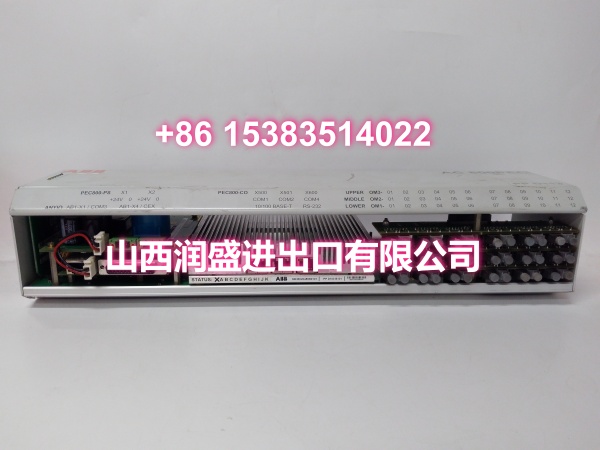
Natural FAQ
What’s the difference between 3BHE020455R0101 and 3BHE020455R0001? These are different revision identifiers for the PPD103B101 controller. R0101 typically represents a later revision with potential hardware or firmware improvements over R0001. In many cases, later revisions are backward-compatible, but you should verify firmware compatibility and I/O mapping with your engineering team before deploying a different revision.
Can this controller handle both analog and digital communication? Yes. The PPD103B101 features hybrid I/O flexibility — it handles legacy 4-20mA / 0-10V analog signals alongside Modbus RTU communication over RS-485. This makes it particularly well-suited for retrofit applications where you need to integrate with both older analog field devices and modern digital control systems.
What does the black start capability mean? Black start capability allows the controller to bring a generator online without relying on external power sources. This is critical during grid collapse scenarios where the plant needs to restart independently. The PPD103B101 can self-power its excitation control during startup, enabling the generator to build voltage and synchronize with the grid once it’s restored.
What happens if the self-diagnostics trigger a relay output? The relay outputs are designed to provide pre-failure alerts for conditions like thyristor degradation, over-temperature, or communication loss. If a diagnostic relay activates, investigate the root cause before resetting. Ignoring these warnings can lead to unexpected excitation system trips or generator damage.
Is this controller tested before shipping? Yes. Every unit goes through incoming visual inspection, anti-counterfeit verification, live functional testing (power-on, communication, I/O verification, excitation control loop), and static-proof packaging before it leaves our facility. We don’t ship untested legacy parts.
Do you offer warranty or return support? All modules are covered under our in-house warranty policy. If the ABB PPD103B101 3BHE020455R0101 fails to operate correctly upon installation under normal conditions, contact our support team for replacement or refund options.
Need the PPD103B101 Modbus register map or the excitation parameter setup guide? I can walk through those for your commissioning reference.