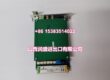
Product Core Brief
- Model: MVME51005E-0163
- Brand: Motorola (Emerson / Artesyn / Abaco)
- Series: MVME5100 VME Processor Module
- Core Function: Provides high-performance, scalable computing for VMEbus-based industrial and embedded control systems.
- Product Type: VME64 Single Board Computer (SBC)
- Key Specs: PowerPC 750 @ 450 MHz | 512MB ECC SDRAM | 1MB L2 Cache | Dual PMC Slots
- Condition: New Original (New Surplus)
Product Introduction
The is a high-performance VME processor module from the MVME5100 series, built on the Motorola Computer Group (MCG) PowerPlus II architecture. It is designed to deliver supercomputing-level performance within a single VME slot, making it ideal for mission-critical applications in military, aerospace, industrial automation, and semiconductor manufacturing.
This specific model, , is configured with a 450 MHz PowerPC 750 processor, 512 MB of ECC SDRAM, and a 1 MB backside L2 cache. The integrated PCI bridge and memory controller ASIC eliminates traditional bottlenecks, achieving up to 582 MB/s memory read bandwidth and 640 MB/s burst write bandwidth while maintaining full 264 MB/s PCI throughput without starving the CPU. It features dual PMC slots and supports both PMC and IPMC P2 I/O modes, offering exceptional flexibility for I/O expansion and backward compatibility with legacy MVME2300/2400 and MVME2600/2700 systems.
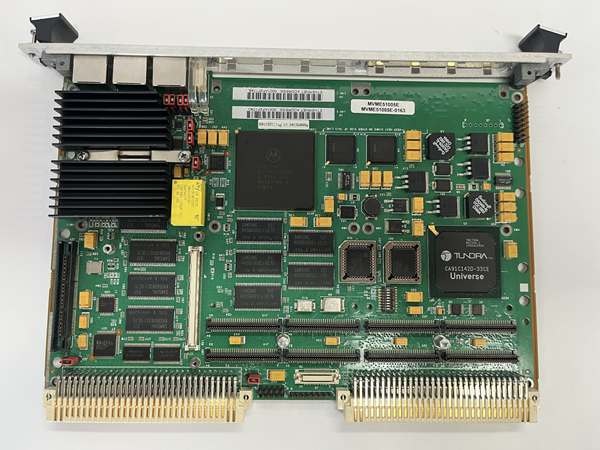
Motorola MVME51005E-0163
Key Technical Specifications
| Parameter | Value |
|---|---|
| Module Type | VME64 Single Board Computer |
| Processor | PowerPC 750 @ 450 MHz |
| Architecture | PowerPlus II with Integrated PCI/Memory Controller |
| Memory | 512 MB ECC SDRAM (IEEE 1101 handles) |
| Cache | 32KB/32KB L1, 1 MB Backside L2 |
| Expansion | 2x 32/64-bit PMC Slots (IEEE P1386.1) |
| Onboard I/O | Dual 10/100 Ethernet, Dual RS-232 Serial |
| Storage | 17 MB Flash, 32KB NVRAM with Battery Backup |
| Bus Interface | VME64 (6U Form Factor) |
| P2 I/O Modes | PMC Mode & IPMC Mode (Jumper Configurable) |
Quality Control Process (Engineer’s Perspective)
We don’t just box these and ship them. Here is our actual bench test workflow.
- Incoming Verification: We verify the serial number against Motorola/Emerson traceability records. A visual inspection checks for bent pins on the VME64 P1/P2 connectors, ensures the PMC slot guides are intact, and verifies the NVRAM battery is present and not corroded.
- Live Functional Test: We mount the unit in a live VME64 test chassis. We verify the PowerPC 750 boots correctly, initializes the 512 MB ECC SDRAM, and recognizes both PMC slots and onboard Ethernet/Serial ports.
- Bus Performance Test: We run memory and PCI bandwidth benchmarks to confirm the PowerPlus II architecture meets the 582 MB/s read and 640 MB/s write specifications without bus errors or CPU starvation.
- Peripheral & Storage Test: We test both 10/100 Ethernet interfaces, serial ports, and verify Flash/NVRAM read/write integrity and battery backup functionality.
- Final QC & Packaging: The module is sealed in an anti-static bag with silica gel. A QC sticker showing the test date and technician initials is applied to the exterior.
Replacement Pitfall Guide
Field replacements on VME systems are unforgiving. Watch out for these traps.
- P2 I/O Mode Mismatch: ❗ Critical. The supports two jumper-configurable P2 I/O modes: PMC and IPMC.
- PMC Mode: Routes PMC rear I/O to the P2 connector (backward compatible with MVME2300/2400).
- IPMC Mode: Supports legacy MVME761/MVME712M I/O modules via an IPMC adapter in PMC slot 1.
- Action: You must verify and set the jumpers on the new board to match your existing system’s P2 I/O configuration. Incorrect jumper settings will cause I/O failures.
- Processor Variant Mismatch: ❗ Critical. The MVME5100 series was shipped with different CPU options (e.g., MPC7400 with AltiVec vs. MPC750). This -0163 model uses a PowerPC 750. Your application’s boot image and software may be compiled for a specific CPU. Installing the wrong variant will cause boot failures or application crashes.
- PMC Card Compatibility: Verify that your existing PMC cards are compatible with the PowerPlus II PCI bridge and the configured P2 I/O mode. Some older PMCs may not be recognized or may require specific P2 routing.
- Memory Expansion Modules: If your system uses the optional RAM500 memory expansion mezzanine, ensure the new is configured to support it. The base board memory and expansion memory must be correctly recognized by the boot firmware.
- ESD Damage: The PowerPC processor and PCI bridge are highly sensitive to electrostatic discharge. Always wear a grounded wrist strap when handling the bare PCB. I’ve seen modules fail bench testing because they were handled on a dry winter day without protection.
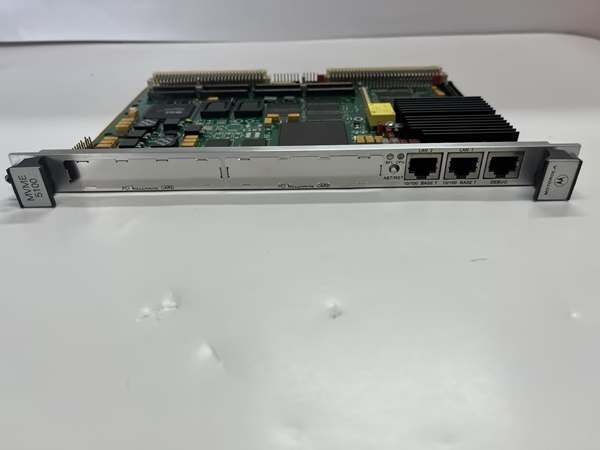
Motorola MVME51005E-0163
Compatibility Matrix & Benchmarks
Compatibility
- Motorola → : Direct Replacement — Verify firmware, CPU, and P2 I/O jumper configuration.
- Motorola MVME5100-0163 → : Direct Replacement — The “5E” is a common distributor/revision suffix; core specs are identical. Verify firmware and jumpers.
- Motorola MVME2400 → : Upgrade Path — MVME5100 offers superior bandwidth and dual PMC; verify backplane and PMC compatibility.
- Motorola MVME2600/2700 → : Migration Path — Different I/O architecture; requires full system re-validation and likely new transition modules.
Benchmarks
- Memory Read Bandwidth: 582 MB/s (sustained, PowerPlus II architecture)
- PCI Burst Write Bandwidth: 640 MB/s (sustained, PowerPlus II architecture)
- Boot Time: < 15 s (from power-on to OS handoff, typical)
Need the boot configuration guide for the ? I can pull up the PPCBug firmware settings, P2 I/O jumper configuration diagrams, and the PMC slot initialization sequence to ensure it boots correctly in your VME chassis.