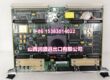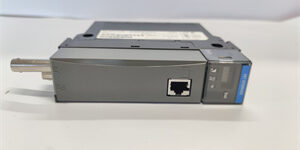
Product Core Brief
- Model: TK-CCR014
- Brand: Honeywell
- Series: DCS Control System
- Core Function: Provides redundant network communication to ensure system reliability and continuous operation.
- Product Type: Redundant Network Interface Module
- Key Specs: 1:1 Component-Level Hot Redundancy | 0.45 kg Weight
- Condition: New Original (New Surplus)
Product Introduction
The is a redundant network interface module designed for Honeywell’s Distributed Control Systems (DCS). In process control environments, reliability is the primary requirement, and this module utilizes advanced redundancy technology to maximize system uptime and safety.
By employing a 1:1 component-level hot redundancy architecture, the ensures that if a local fault occurs, the redundant component seamlessly takes over without interrupting system functions. This allows for online maintenance and significantly increases the Mean Time Between Failures (MTBF) while reducing the Mean Time To Repair (MTTR).
Key Technical Specifications
| Parameter | Value |
|---|---|
| Module Type | Redundant Network Interface Module |
| System Compatibility | Honeywell DCS Control System |
| Redundancy Architecture | 1:1 Component-Level Hot Redundancy |
| Weight | 0.45 kg |
| Shipping Weight | 2 kg |
| Primary Function | Network Communication & Fault Tolerance |
| Maintenance | Online Hot-Swap Capable |
| Certifications | Industrial Automation Standards |
| Origin | United States |
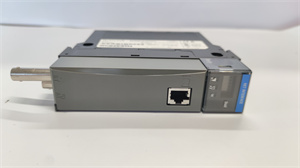
HONEYWELL TK-CCR014
Quality Control Process (Engineer’s Perspective)
We don’t just box these and ship them. Here is our actual bench test workflow.
- Incoming Verification: We verify the serial number against OEM traceability records. A visual inspection checks for bent pins on the network connectors and ensures the DIN rail clip isn’t cracked.
- Live Functional Test: We mount the unit in a live DCS test rack. We simulate a network communication load and verify the redundant handshake protocol operates flawlessly.
- Electrical Parameter Test: We perform a 500 V Megger test between the network terminals and the backplane. Insulation resistance must exceed 10 MΩ. Ground continuity is also verified.
- Firmware Verification: We read the module’s internal firmware revision via the service port. We photograph the DIP switch settings to ensure they match factory defaults before shipping.
- Final QC & Packaging: The module is sealed in an anti-static bag with silica gel. A QC sticker showing the test date and technician initials is applied to the exterior.
Replacement Pitfall Guide
Field replacements on DCS networks are unforgiving. Watch out for these traps.
- Firmware Mismatch: ❗ Critical. A brand-new might have a newer firmware revision than your existing system. The DCS controller may block it with a configuration mismatch fault. Always check your system’s allowed firmware matrix before installing.
- DIP Switch / Jumper Misconfiguration: This module uses hardware addressing for network node ID. If you pull the old card and forget to transfer the binary address switches to the new one, the system will not recognize it.
- Terminal / Cable Incompatibility: Inspect the network cabling before plugging in the new card. Incorrect termination or damaged cables will cause communication failures that mimic module faults.
- Power Supply Mismatch: Verify your external 24 VDC field power supply has at least 20% headroom over the total calculated load. This module draws current for its own internal monitoring circuits.
- ESD Damage: Safety modules are highly sensitive to electrostatic discharge. Always wear a grounded wrist strap when handling the bare PCB. I’ve seen modules fail bench testing because they were handled on a dry winter day without protection.
Keep these in mind and you’ll cut 90% of rework time.
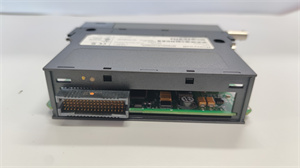
HONEYWELL TK-CCR014
Compatibility Matrix & Benchmarks
Compatibility
- Honeywell TK- Rev A → TK- Rev B : Direct Replacement — Verify firmware compatibility with DCS CPU.
- Honeywell TC- → TK- : Needs Adaptation — Verify network protocol and backplane architecture compatibility.
Benchmarks
- Redundant Switchover: < 10 ms (zero process interruption during failover)
- System Availability: Up to 99.999% (reducing annual downtime to mere minutes)
Need the network topology diagram for the redundant interface? I can pull up the termination schematic for the primary and secondary network links.