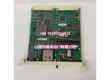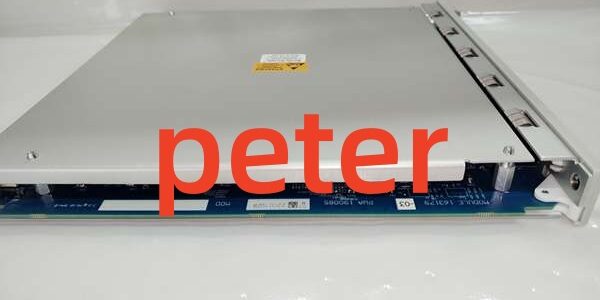
Product Core Brief
- Model: 170180-01-00
- Brand: Bently Nevada (Baker Hughes)
- Series: FieldMonitor Distributed Machinery Monitoring System (separate platform from 3500 rack chassis)
- Suffix Breakdown:01 = Standard 2-channel transducer I/O circuit layout; 00 = No custom coating or modified hazardous approvals
- Core Function: Compact remote signal interface module that accepts conditioned output from external Proximitor drivers and seismic accelerometers, converting raw machine vibration/displacement signals for FieldMonitor host rack processing
- Product Type: DIN rail mount field I/O card, single slot form factor for FieldMonitor terminal base assemblies
- Key Specs: Dual independent transducer input channels | 0 to -Vt signal range | ATEX Class I Div 2 / Zone 2 hazardous rating
- Condition: New Original factory sealed with OEM lead time; fully bench-calibrated refurbished surplus stock ships within 3 working days
Key Technical Specifications
- Channel Count: 2 fully isolated transducer input channels (labeled A / B on front label)
- Supported Transducer Sources: External 3300 XL Proximitor sensor outputs, piezoelectric accelerometers, Velomitor velocity sensors
- Input Signal Voltage Window: 0 to negative transducer supply voltage (0 to -Vt)
- Frequency Response: Flat within ±5% up to 25 kHz for high-frequency bearing fault detection
- Static Current Draw: Max 2.0 mA with no transducers connected
- Overcurrent Protection Threshold: 33.6 mA minimum, 37.6 mA maximum at 25°C ambient
- Mounting Standard: Standard DIN rail 35mm mounting clip integrated into housing
- Operating Temperature Range: -34°C to +85°C continuous; storage −40°C to +85°C
- Humidity Tolerance: 0–100% RH condensing (non-submerged) with sealed field connectors
- Physical Weight: 277 g (0.61 lb)
- Communication Port: Rear-mounted DB9 serial connector for FieldMonitor backplane bus communication
- Hazardous Area Certifications: ATEX II 3G EEx nA [L] IIC T4, Class I Div 2 North American, BR-Ex nA IIC T4 Brazil
- Mechanical Shock/Vibration: Rated for 30 g peak half-sine shock, 5–2000 Hz continuous vibration exposure
Product Introduction
Centralized 3500 rack installations require lengthy shielded transducer cabling that introduces EMI noise and installation cost overhead for widely distributed compressors and pumps. This unit solves that pain point by mounting directly near rotating equipment to capture clean vibration signals locally before sending conditioned data back to the central FieldMonitor host rack via short bus wiring.Its two-channel layout pairs perfectly with dual radial bearing sensor setups on auxiliary machinery, consolidating two independent measurement streams into one compact DIN rail slot. This hardware is not physically compatible with 3500 series rack backplanes; it exclusively pairs with FieldMonitor distributed terminal base hardware. Not recommended for turbine primary protection systems requiring SIL2 TMR voting, as critical safety monitoring relies on 3500 M-series rack modules with redundant backplane architecture.
Key Selling Points & Differentiators
- Near-machine DIN rail mounting cuts long transducer cable runs by 70% compared to centralized 3500 rack layouts, reducing EMI-induced false vibration alarms on distributed pump and compressor fleets.
- Native hazardous zone ATEX Zone 2 certification eliminates separate external explosion-proof junction boxes for offshore and refinery field mounting locations.
- Dual-channel design captures paired X/Y radial vibration readings from a single unit, minimizing DIN rail slot consumption on dense local field enclosures.
- Wide −34°C to +85°C operating range supports unheated outdoor platform enclosures without auxiliary cabinet cooling hardware.
- Refurbished surplus units carry a 12-month functional warranty covering signal conditioning circuits, serial transceivers, and channel isolation integrity; factory-new OEM assemblies ship with a full 36-month manufacturer performance warranty.
- Overcurrent short-circuit protection per channel prevents permanent damage to costly Proximitor drivers and accelerometers during field cable abrasion or wiring misconnection events.
Quality Transparency SOP
- Incoming Verification: Cross-reference serial numbers against OEM FieldMonitor production archives to filter counterfeit assemblies. Complete visual audit of front channel terminal blocks, rear DB9 serial port, DIN rail mounting clips, and PCB signal traces; timestamp photos of connector corrosion, cracked housing, or bent pin damage.
- Live Bench Test: Clip the unit to a standard DIN rail test fixture paired with a calibrated FieldMonitor host rack power supply. Run continuous 24-hour thermal soak test with simulated Proximitor gap and accelerometer vibration signals across both channels to validate linear signal transfer and stable serial bus communication.
- Electrical Tests: 500 V megohmmeter insulation test confirms resistance >10 MΩ between each field input terminal and module chassis ground; verify all overcurrent protection trigger thresholds match OEM factory calibrated limits.
- Firmware & Layout Backup: Flash the latest FieldMonitor platform compatible firmware revision, log exact version numbers, and document planned channel transducer assignments for site maintenance records. No user-adjustable measurement scaling resides on this I/O module.
- Final QC & Packaging: Inject full-range simulated transducer signals to validate flat frequency response up to 25 kHz. Wrap the unit in anti-static foam, attach serialized QC Passed tag with timestamped linearity test data, and ship inside rigid shock-resistant cardboard crates. Bench test logs and raw signal readouts are available to buyers on formal written request.
Technical Risk Avoidance Section
❗ Platform Mismatch Risk: Attempting to install this FieldMonitor module into a 3500 series rack slot results in physical misalignment, incompatible backplane power pinouts, and zero valid signal data transfer. Prevention: Confirm site monitoring platform is FieldMonitor distributed system before ordering. Field anecdote: A refinery maintenance team incorrectly purchased this unit for a 3500 compressor rack and required emergency reorder of compatible 3500/42M mixed I/O monitor hardware.❗ Hazardous Zone Wiring Unsealed Connector Risk: Leaving field transducer terminal blocks uncovered in classified Zone 2 enclosures voids ATEX certification and creates ignition hazard risk. Prevention: Install factory-supplied sealed terminal block covers for all field wiring runs in explosive classified areas.❗ Serial Bus Ground Loop Risk: Dual-point grounding of the FieldMonitor DB9 bus cable creates circulating low-frequency noise that distorts vibration signal data, triggering intermittent missing channel fault flags on the host rack. Prevention: Single-point chassis earth reference at the central FieldMonitor host cabinet only.❗ ESD Damage Risk: Ungrounded field tools touching exposed front terminal pins discharge static and destroy delicate high-frequency signal conditioning ICs; third-party PCB repair labor costs exceed $1,200 for obsolete FieldMonitor hardware. Prevention: Mandate grounded ESD wrist straps for all field module wiring and replacement work.❗ Missing Channel Transducer Mapping Backup Risk: Failing to document which Proximitor/accelerometer feeds each A/B channel before module replacement forces full re-calibration of all distributed vibration measurement points after swap-out, delaying machinery return to service.
Quick summary: Deploy exclusively with FieldMonitor host hardware, seal terminals for hazardous zone mounting, implement single-point bus grounding, retain transducer channel mapping documentation, and follow ESD protocols to eliminate nearly all common distributed field I/O failure modes for this component.
FAQ
Q: Does this unit support hot-swap replacement while the FieldMonitor host rack remains energized?A: Yes, the DIN rail clip design allows removal without shutting down the central host rack. The host rack will temporarily flag the two associated measurement channels as faulted until the replacement module completes serial bus handshake.
Q: Can this module process raw eddy-current probe signals directly without an external Proximitor driver?A: No. This I/O card only accepts the conditioned analog output from standalone external Proximitor units; it cannot generate the high-frequency oscillator supply required to drive raw proximity probe coils.
Q: What warranty coverage applies to refurbished surplus inventory of this FieldMonitor transducer I/O module?A: Refurbished assemblies carry a 12-month functional warranty covering channel signal conditioning circuits, DB9 serial communication transceivers, and terminal isolation hardware. Cosmetic surface scuffs and minor terminal screw discoloration are excluded from claim eligibility. Factory-new OEM units ship with a full 36-month manufacturer warranty.
Q: Will power cycling the FieldMonitor host rack erase stored channel transducer sensitivity or alarm threshold configurations on this module?A: No. All scaling and alarm logic parameters reside on the central FieldMonitor host rack controller, not the remote I/O module itself. Power cycling only temporarily interrupts live signal streaming with no permanent loss of measurement configuration data.
Q: Can RTD temperature probes or 4–20mA process transmitters be wired directly to this module’s A/B input terminals?A: No. This hardware exclusively processes conditioned vibration/displacement signals from Proximitors and seismic transducers. Process variable and thermal measurements require separate FieldMonitor analog input I/O modules designed for 4–20mA and RTD sensor types.
Q: I operate a distributed auxiliary pump station that only requires one vibration sensor channel. Is it acceptable to leave the second input channel unused?A: Yes. The unused second channel draws negligible power and creates no cross-channel signal interference. Install factory blank terminal jumpers on empty input terminals to block dust and moisture ingress in humid field enclosures.
Q: Does this remote I/O module locally store transient vibration fault waveform snapshots after machinery trips?A: No. All high-frequency fault waveform capture and historical trending data is managed exclusively by the central FieldMonitor host rack controller; this field I/O component only forwards real-time conditioned analog signals with no local data retention capability.