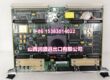
Component Snapshot At-a-Glance
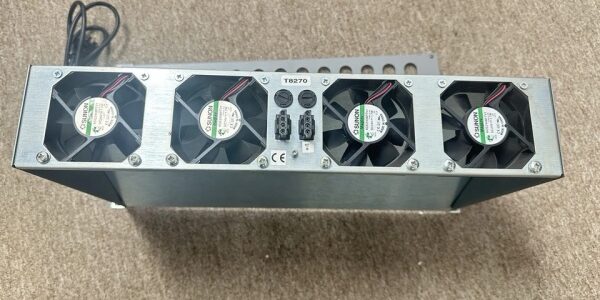
- Model: T8270; harsh environment coated variant T8270C
- Alt. P/N: T8271 (8-fan roof exhaust tray, non-interchangeable drop-in)
- Product Series: ICS Triplex Trusted 8000 TMR Safety Instrumented System, rack thermal cooling ancillary
- Hardware Type: 2U front rack intake fan tray, 4 Papst fans, bottom chassis forced air supply
- Key Feature: Dual redundant split 24VDC power (2 fans per circuit), independent per-fan overload/reverse polarity protection, total 276m³/h intake airflow, dry contact collective fan fault output
- Primary Field Use: Pull cool ambient air into T8100 CPU/I/O chassis from rack lower front; pairs with T8271 roof exhaust tray to create full vertical cross-rack airflow, stop T8110B CPU thermal slice mismatch faults.
Hard-Numbers: Technical Specifications
- Protocol Support: No digital backplane bus; collective fan fault dry contact wired to T8292 power distribution unit for DCS alarm capture
- Port Count: Dual SKT1/SKT2 24VDC power input sockets; TB1 screw terminal block for fault relay wiring; four individual fan assemblies with winding current sense circuits
- Baud/Data Rate: No serial/Ethernet communication; fan stall/fuse fault state sampled 100ms by plant alarm logic
- Operating Temperature: 0°C to +60°C standard T8270; T8270C storage rated -40°C to +70°C
- Isolation Rating: 1000VAC isolation between 24V fan power and fault relay dry contacts
- Power Draw: Total 16W nominal; two independent 8W circuits split 2 fans each, 250mA anti-surge internal fuse per circuit
- Fan Performance: Single fan 69m³/h airflow @3100RPM; total tray intake airflow 276m³/h; 32dB low noise per fan
- Reliability MTBF: 70,000 hours @40°C ambient; 35,000 hours @70°C cabinet heat
- Built-In Protections: Per-fan reverse polarity lockout, overload current limiting, open fan winding stall detection
- Physical: 88mm H × 483mm W × 140mm D; weight 2.34kg; IP20 rating with factory front intake grill; 2U 19” rack front lower mounting
- Cooling Pairing: Mandatory matched set with T8271 roof exhaust tray for full vertical rack air circulation
The Real-World Problem It Solves
Roof-only T8271 exhaust trays create negative pressure dead zones deep inside dense T8110 chassis; hot air stagnates around T8110B CPUs and T84xx I/O cards, pushing PCB temps over 60°C rating and triggering persistent slice discrepancy faults. Single non-redundant fan circuits lose half cooling capacity if one fuse blows mid-run.
- Where you’ll typically find it:
- Refinery hydrocracker SIS rack lower front intake, paired with T8271 roof exhaust above dual T8110B CPU chassis
- Combined-cycle power plant burner management safety cabinets stacked with high-density T8403/T8431 I/O cards
- Offshore platform hazardous zone ESD control racks using T8270C coated fan drive electronics to resist salt fog corrosionDual split redundant 2-fan circuits retain partial cooling on single feed loss; front intake + roof exhaust cross-flow eliminates chassis hot spots and stabilizes TMR hardware operating temperatures.
Hardware Architecture & Under-the-Hood Logic
This intake fan tray is a passive thermal ancillary with analog fault sensing circuits only; no TMR voting or safety logic processing, all overtemperature protection lives on T8110 CPU and I/O modules.
- Dual independent 24VDC power inputs feed two isolated circuits, each powering two fans with dedicated 250mA anti-surge fuses to limit fault spread across the tray.
- Each Papst fan unit has onboard reverse polarity and overload electronic protection; a single fan short cannot collapse the opposing redundant fan power leg.
- Winding current sense circuits monitor each fan motor; stalled or open winding fans trigger a collective normally closed fault relay dry contact at TB1 terminal block.
- Internal airflow baffle directs cool intake air straight up through T8100 chassis CPU heat sinks and I/O card slots; T8271 roof tray pulls heated air out the rack top for complete vertical circulation.
- Fault relay wiring routes stall/fuse loss signals to T8292 power distribution MCB unit, converting discrete fan failure states to plant DCS alarm tags for operator visibility.
- T8270C coated variant seals fan drive PCB electronics against salt fog, oil mist and condensation common in offshore and refinery control rooms.
Field Service Pitfalls: What Rookies Get Wrong
Substituting T8270 Front Intake With Roof Exhaust
New techs install a roof fan tray in the lower front rack slot. Exhaust airflow recirculates hot cabinet air back into the T8100 chassis, causing rapid CPU overtemperature slice mismatch faults within a few operating hours.
- Field Rule: T8270 is strictly lower-front intake only; is exclusive roof exhaust; always install both trays as a matched cooling set per rack drawing.
Jumpering SKT1 and SKT2 Dual Power Inputs To Single 24V Feed
Techs cross-jumper the two fan power sockets to one single DC supply. Loss of that single feed disables all four intake fans simultaneously, creating total cooling loss and immediate SIS overtemperature trip risk.
- Quick Fix: Run fully separate redundant 24V power feeds to SKT1 and SKT2 per engineering drawing; never connect both sockets to a single power leg.
Skipping Quarterly Front Grill Dust Filter Cleaning
Techs ignore clogged intake grilles coated with process dust and oil mist. Restricted cool air intake cuts total airflow volume by 40%+, raising internal chassis temperature above 60°C operating limit.
- Field Rule: Blow compressed air through the T8270 front intake grill every 90 days; replace noisy, worn fans during scheduled unit outages before stall faults activate DCS alarms.
Commercial Availability & Pricing Note
Please note: The listed price is for reference only and is not binding. Final pricing and terms are subject to negotiation based on current market conditions and availability.